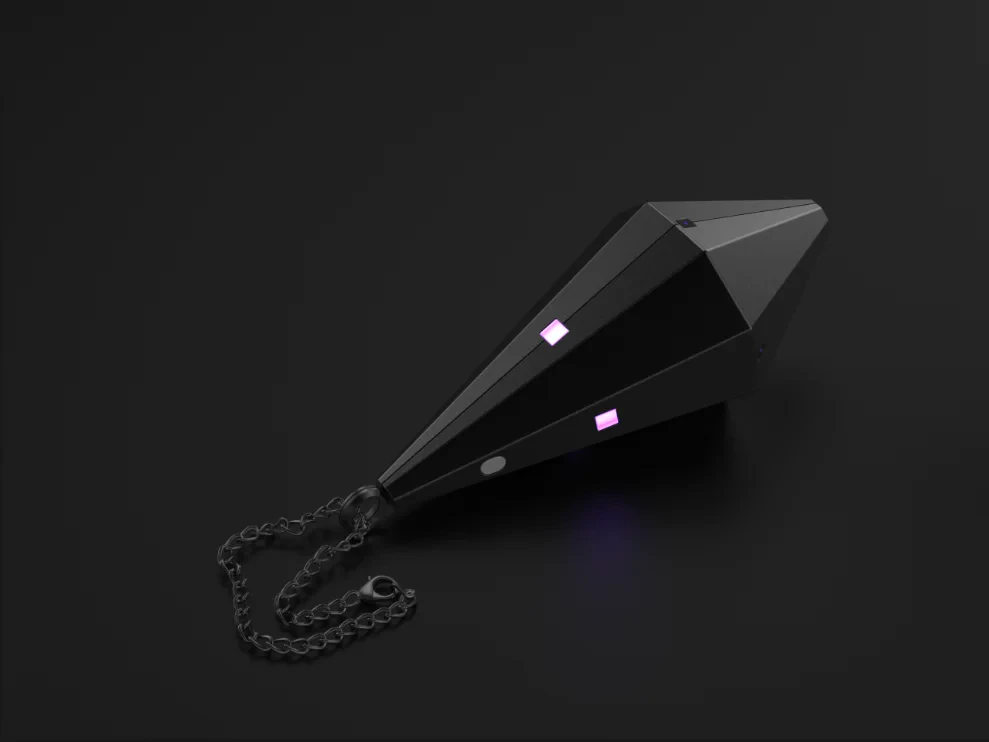
UVC sanitizing device
Handheld UVC device: LED board, driver electronics and battery packaged into a faceted molded housing, with the heat path from the LEDs into the housing worked out so the outer surfaces stay comfortable to hold.
We design the device and the equipment that builds it: device housings, mechanisms and prototypes, plus fixtures and benchtop stations for dispensing, bonding, curing and test. Make a manual step repeatable without buying a full automation line.
We reply within one business day. NDA on request.
Hands-on experience from complex hardware programs, including
For device startups developing a product, and for manufacturers moving from manual builds to repeatable production.
Housings, mechanisms, fluid paths and electronics packaging for the device itself, from concept to production CAD.
Printed and machined prototypes to test fit, function and usability before design freeze.
Molded and machined parts reviewed for tooling, tolerances and assembly before the design moves to production.
Fixtures and stations that place adhesive in the same spot and amount every time.
Cure stations and holding fixtures matched to your adhesive and cycle time.
Nests, locators and press tooling for luers, tubing, housings and small components.
Leak, flow, force and functional test fixtures for in-process and final checks.
Carousels, stages and holders for automated sampling and benchtop lab work.
Drawings, BOMs, test records and design notes your team can file in the design history or equipment records.
Real projects we designed. Client names stay confidential.
Handheld UVC device: LED board, driver electronics and battery packaged into a faceted molded housing, with the heat path from the LEDs into the housing worked out so the outer surfaces stay comfortable to hold.
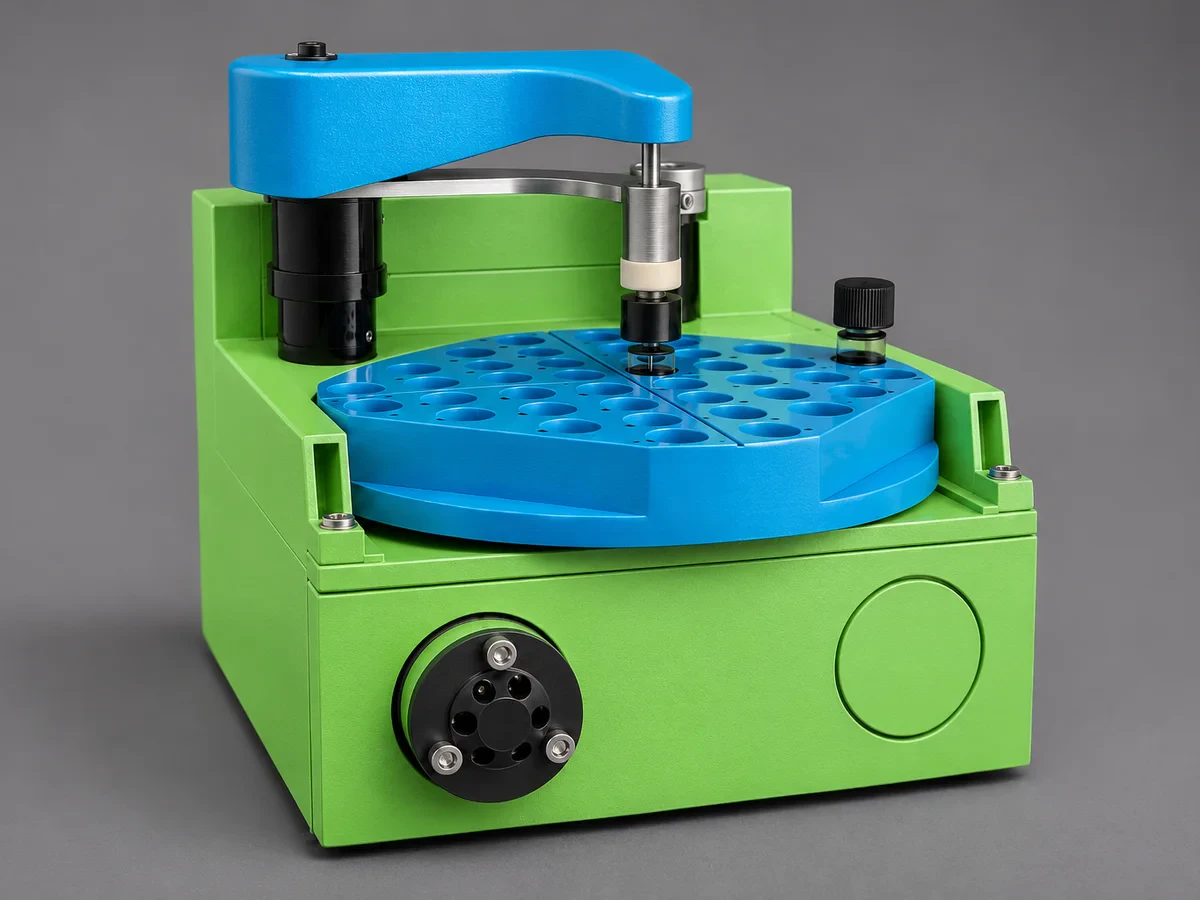
Benchtop sampling fixture for a life-science team: a rotary carousel with 48 positions, a precision head on a vertical stage and a sealed base, designed for repeatable automated sampling.
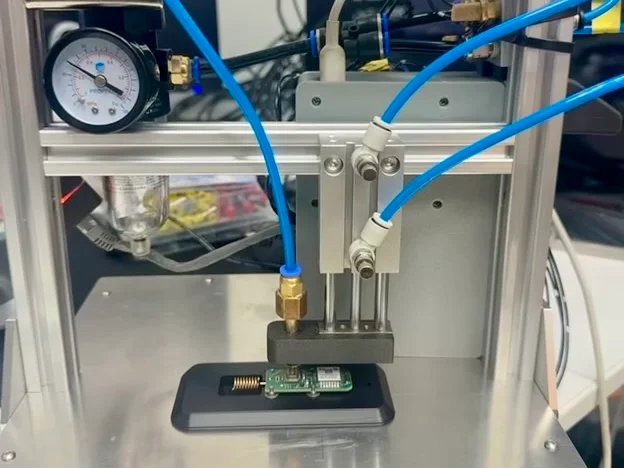
A guided pneumatic cylinder seals a test head onto the part in its nest, and a regulator with a gauge sets the test pressure while the sensor and firmware are checked. Sealed medical devices need the same kind of leak and pressure check.
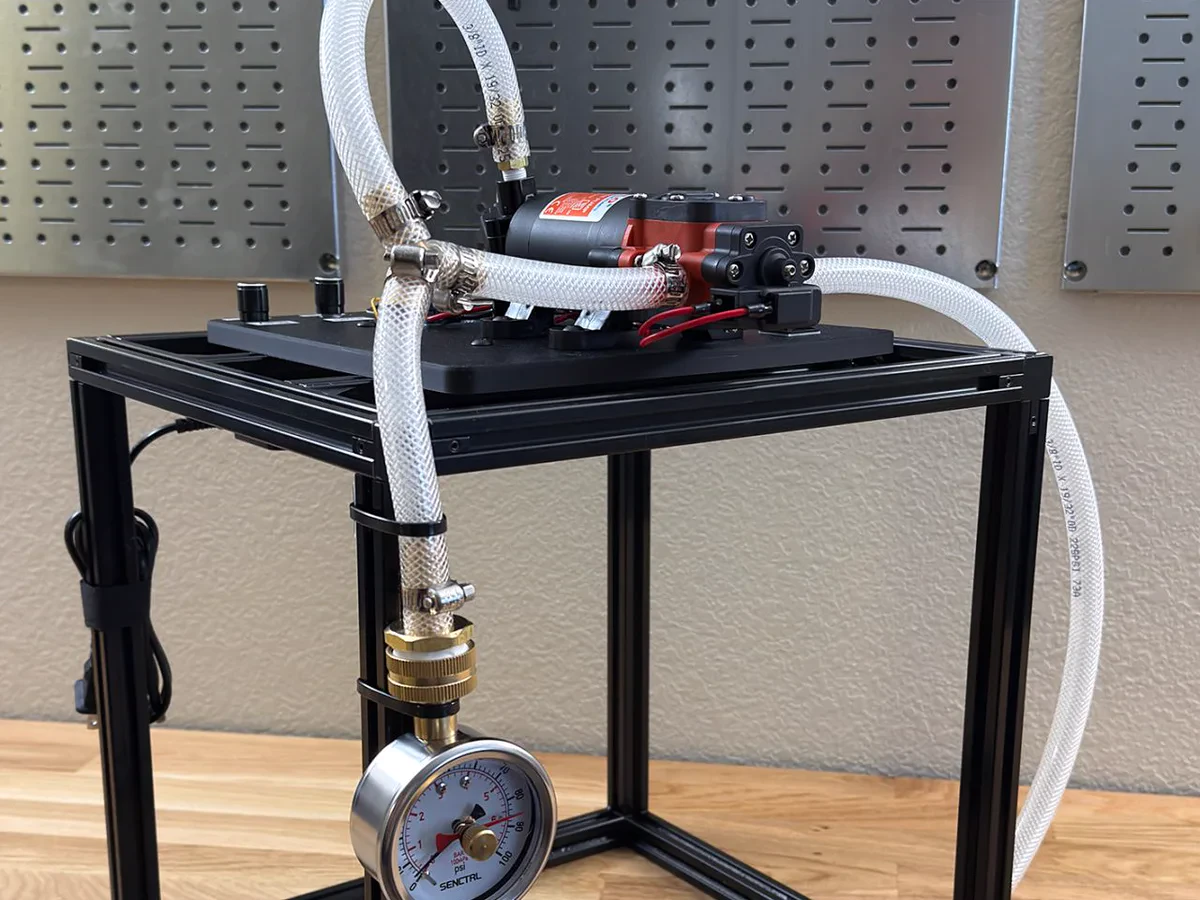
Fluid-handling rig with a pump, pressure regulation and gauge on an extrusion frame, used to tune flow and pressure. The same approach carries over to adhesive and fluid dispensing stations.
Quoted word for word from client reviews.
“Viktor has been excellent to work with so far. He is highly responsive, detail-oriented, and brings a strong understanding of both mechanical design and real-world manufacturing constraints. He consistently thinks ahead, proposes practical solutions, and communicates clearly throughout the process. In this phase, he has shown great initiative in progressing the housing design and proactively considering materials and finish options to support both function and presentation. His work has been reliable and aligned with the direction of the product. Looking forward to continuing into the next stages together.”
“Victor is an excellent mechanical designer with strong prototyping instincts. He iterates quickly, tests in the real world (not just CAD), and proposes practical design improvements that directly address failure modes. Communication was clear, he took feedback well, and he consistently followed through. Would happily work with Victor again.”
“Victor is great at identifying potential design issues, communicating them effectively and getting things done in a timely manner.”
Whether it is the device or a step on the line, you see a concept and a fixed price first.
Requirements and sketches for a new device, or part files, SOP and cycle time for an assembly step.
Device concept or equipment concept, with a fixed price for the next phase.
Device prototypes for bench testing, or the first fixture tried on real parts with your process engineer.
Drawings, BOMs, test records and design notes for your design history or equipment qualification.
Clear numbers up front, so you know if we are a fit before the first call.
Concept, prototype and production design of the device, quoted one phase at a time.
Dispensing, curing or test station with motion, sensing and controls.
Nest, locators and clamping for one manual step.
Every project is led by Victor B., founder and lead engineer of Hardware Solutions, with 15+ years designing mechanisms, test equipment and production hardware. Before founding the firm he worked on hardware programs at Meta, Toyota, Navistar and IonQ.
We design medical and health devices, and the fixtures and benchtop equipment to build and test them, working alongside your quality and regulatory team.
You talk directly to the engineer doing the work, not an account manager.
More about Victor: LinkedIn
Both. We do the mechanical design of the device (housings, mechanisms, fluid paths, electronics packaging), build prototypes for bench testing and review parts for manufacturing before design transfer. Your quality and regulatory team owns design controls and submissions; we deliver the drawings, test records and design notes they need.
For a new device: requirements, sketches or an early prototype; we come back with a device concept and a fixed price for the first phase. For production: one assembly step that is slow, variable or causing scrap, with part files and cycle time; we come back with an equipment concept and a fixed quote.
Yes. We deliver drawings, BOMs, design notes and test results your quality team can file in the design history file or the equipment records. Tell us your document templates, revision control and qualification needs at the start.
Yes. We specify cleanroom-friendly materials (anodized aluminum, stainless steel, acetal or PEEK), avoid exposed lubricants and design for wipe-down.
Yes. Send it with your first message and we sign before you share any files. Once invoices are paid, the CAD, drawings and design rights belong to you.
Tacoma, Washington. We work with US companies remotely and visit sites around Seattle and Tacoma in person.